

Long Span 220
(Cofraplus RMD220)
PLAIN galvanised as standard, with optional protective coatings available on request.
This profile offers a 750mm cover width

Nationwide delivery
24 hour delivery
24 hour support
PLAIN OR COLOURCOAT
RMD220 -Longspan
Type profile
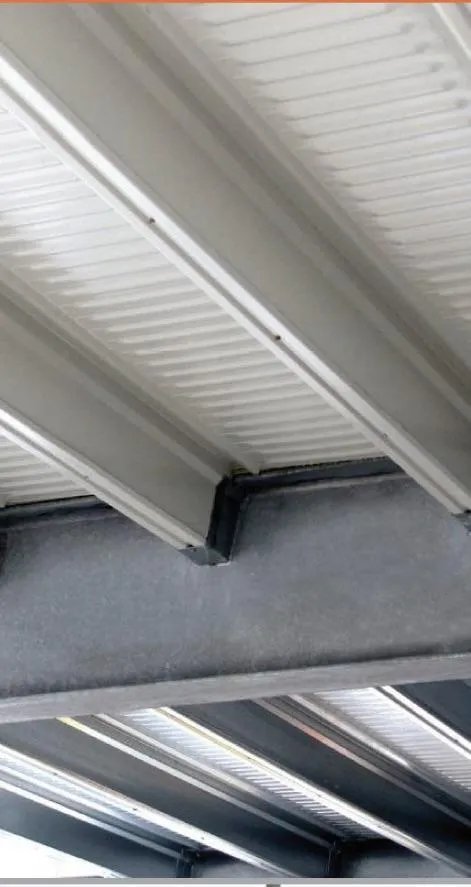
The 220 Deep Profile is an advanced structural decking solution engineered for heavy-duty applications.
It is a fundamentally different product from the standard composite profiles in the RMD range, and it is important to understand that difference before specifying it.
RMD220 uses an additive design approach: the structural resistance of the steel deck profile and the resistance of the ribbed reinforced concrete slab are calculated separately and combined to give the floor system its full resistance. Reinforcement bars within each rib are an integral and non-optional part of the structural design at every span and every fire period.
Watch this short video for a quick explanation!
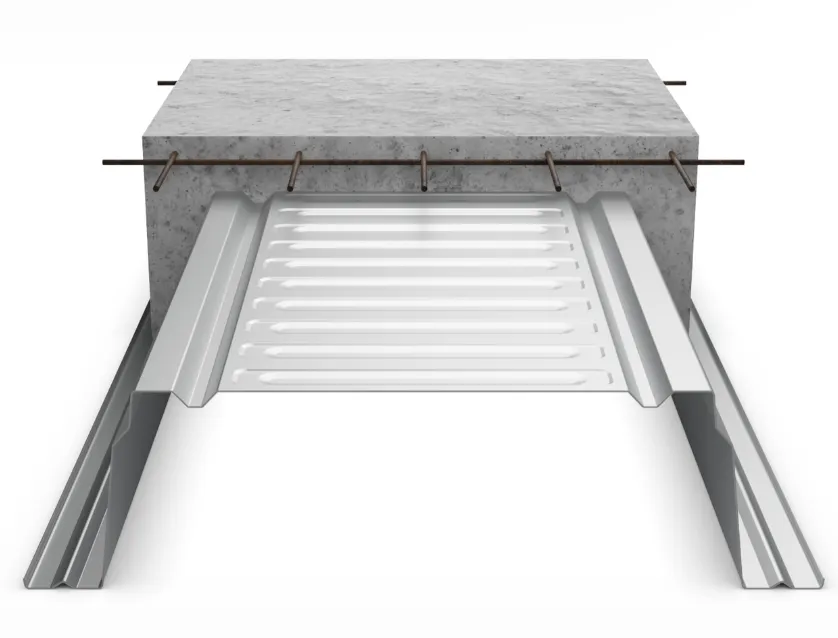
Extended Spans and Load Capacity: The 220 deep profile supports spans of up to 6.0 metres, significantly reducing the need for intermediate supports. Its robust design handles substantial live and dead loads, ensuring structural efficiency and safety.
Optimised Concrete Usage: Due to its innovative profile design, the 220 deep profile minimises concrete volume requirements while maintaining exceptional slab strength. This reduction in material usage lowers project costs.
Longevity: Durable galvanised coating provides extended service life
Fire Resistance: The profile is engineered to meet fire resistance ratings of up to 120 minutes, ensuring compliance with safety standards when used with the appropriate reinforcement and concrete depth.
Acoustic Control: With excellent sound absorption capabilities, this profile is well-suited for environments where noise reduction is critical. Its design can be customised to meet stringent acoustic performance standards with additional treatments.
Efficient Logistics and Installation: Each artic load can deliver approximately 500–600 m² of decking, streamlining transportation and reducing on-site storage. The profile's lightweight yet durable design allows for faster handling and installation.
Flexible Reinforcement Options: Compatible with a range of reinforcement systems, the 220 deep profile accommodates concrete depths ranging from 200 mm to 300 mm, ensuring flexibility for diverse project requirements.
DESIGNED FOR
CONSTRUCTION PROJECTS
Features
Profile depth: 220mm
Cover width: 750mm
Available gauges: 1.13mm, 1.25mm
Steel grade: S350 GD to EN 10346
Corrosion protection: Galvanised ZM175, or galvanised with organic coating (Hairplus 25 micron, Category IIIa)
Minimum concrete above deck (Hc): 80mm
Design approach: Additive (deck resistance plus ribbed reinforced concrete resistance combined)
How additive design differs from composite design: Standard composite profiles (ComFlor, MetFloor, Firth Steels) work by mechanical interlock between the steel deck and the cured concrete, the deck acting as tensile reinforcement in the finished slab. RMD220 works differently.
The steel deck contributes its own structural resistance, and separately the ribbed reinforced concrete slab contributes its own resistance. These are calculated and combined additively. This is why reinforcement bars in every rib are always required regardless of span or fire period, not just at long spans or high fire ratings as with standard profiles.
Benefits
220mm deep ribbed profile, 750mm cover width
Unpropped spans up to 5.5m, propped spans up to 8.5m: the longest span capability in the RMD range
Additive design combines steel deck resistance and ribbed reinforced concrete resistance for maximum structural efficiency
Compatible with steel, concrete, and timber primary frames: the only profile in the range suited to all three
Fire resistance REI 60 to REI 120 achieved through rib reinforcement, without additional fire protection measures at typical slab depths
Deep ribbed geometry produces a highly efficient structural cross-section with low concrete volume relative to slab depth
Diaphragm action capability: when properly connected and detailed, the installed deck can provide lateral restraint to the primary structure
Eliminates secondary beams entirely across wide structural bays, reducing steel tonnage, connections, and erection time
750mm cover width covers more floor area per sheet, reducing joint lines compared with 600mm profiles
Suitable for new build, extensions, and renovation on existing structures
CE marking with DTA No. 3.1/17-927_V1 and AbZ Z-26.1-55
Applications
With a profile depth of 220mm, this decking system offers unparalleled load-bearing capacity and span performance, making it ideal for complex and large-scale construction projects such as high-rise buildings, multi-storey car parks, and industrial facilities.

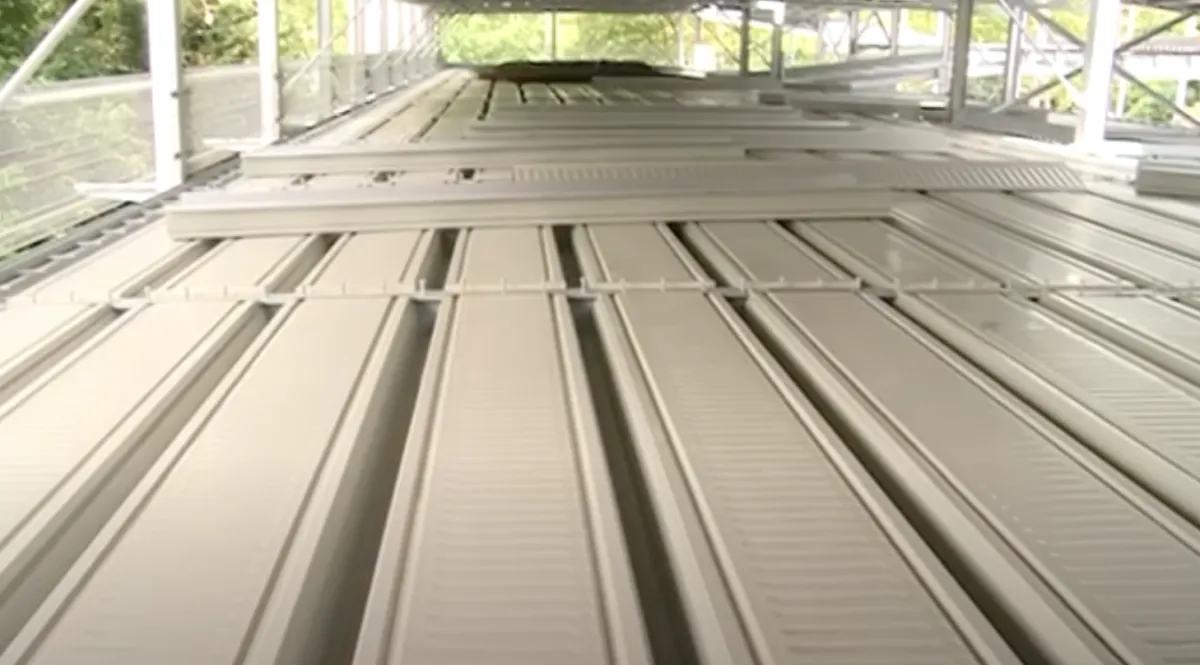
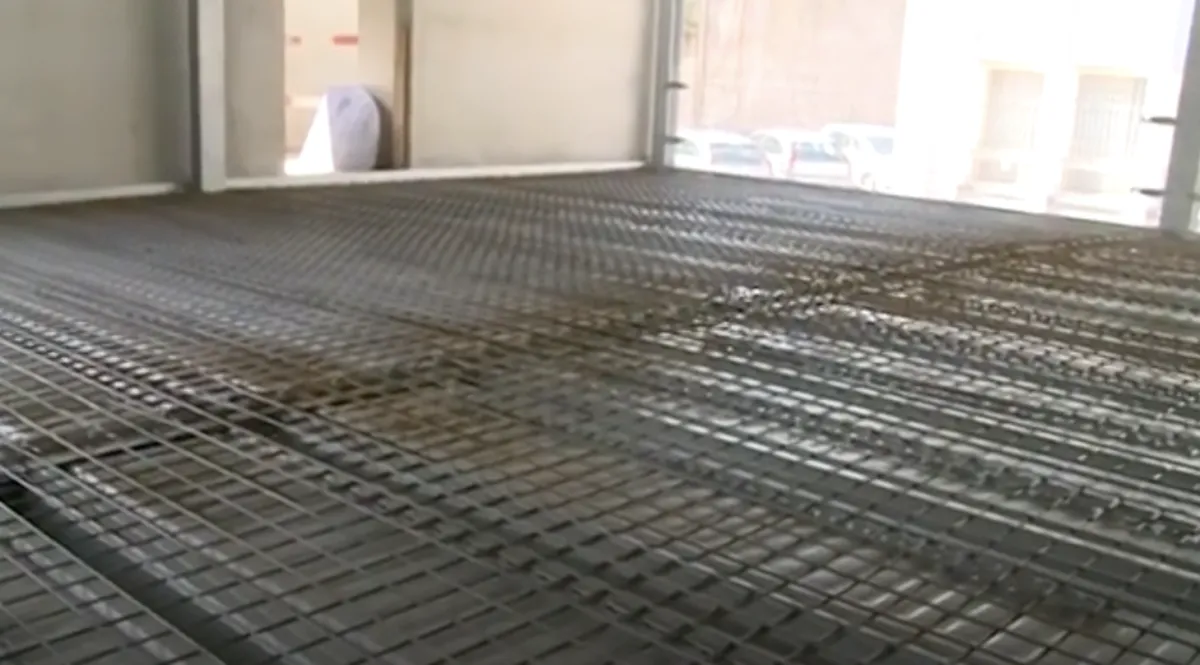
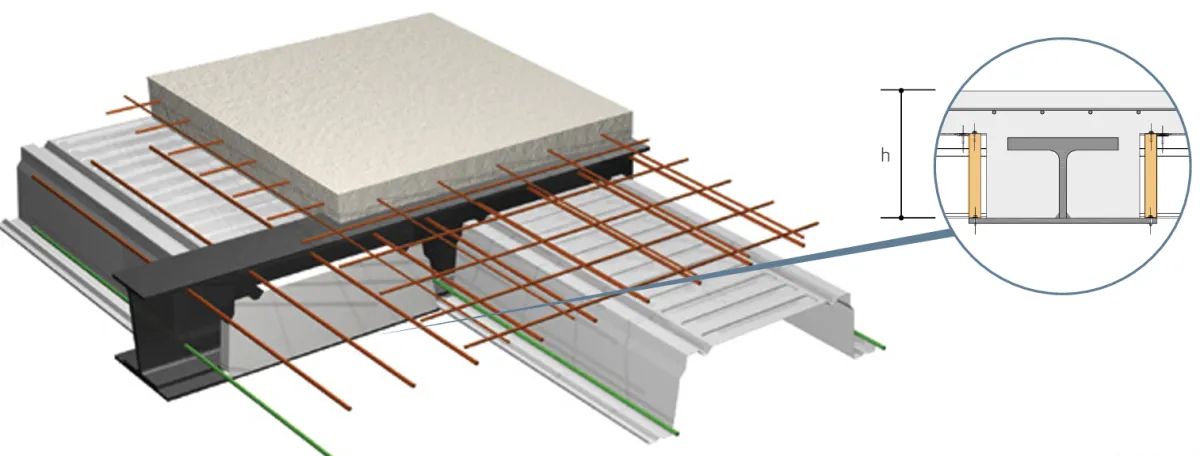
TECHNICAL SPECIFICATION
Technical
RMD220 requires a comprehensive set of auxiliary items that must all be identified, specified, and quantified before a complete supply price can be given. Unlike standard composite profiles where edge trim and end caps are the main accessories, RMD220 projects involve a more extensive list that can have a material impact on overall supply cost and programme.
Every project tender and pre-order checklist should address all of the following:
Reinforcement bars per rib: Diameter (12mm to 25mm), length, quantity, and stirrup specification. Must be engineer-specified. Not supplied by RMD Profiles as standard but must be coordinated at the supply stage.
Stirrups: 6mm diameter at 200mm centres as standard; quantity and length vary with span and trough count. Propped spans require additional welded mesh at mid-supports in addition to stirrups.
Anti-crack mesh above deck: Required by Eurocode 2 and Eurocode 4 for crack control. Grade, pitch, and coverage area must be specified and quantified.
Edge trim: Specified to suit the total slab depth, including 220mm deck plus Hc. Standard slab edge trim heights may be insufficient for a 300mm or deeper total depth. Custom heights may be required.
Restraint straps: Required at all perimeter edge trim locations. Quantity depends on total edge trim run length and trim height.
End caps: Required at open profile ends where sheets do not bear directly onto a closed support. Quantity depends on sheet end conditions around the floor plate.
Side lap fixings: Self-drilling screws or equivalent. Quantity depends on sheet count and span configuration.
End fixings to structure: Shot-fired pins or equivalent for fixing to steel or concrete support. Fixing type depends on the support material. Quantity depends on the support layout and fixing centres.
Temporary propping: If propped spans are required, the propping arrangement, timber packing, and adjustment must be confirmed. Propping design is not part of RMD220 supply.
Closure plates: Required where a full sheet width cannot be achieved at bay edges. Width, gauge, and quantity depend on floor plate geometry.
For more information, download our datasheet, or click here.
ENQUIRY HERE

9 Gaol Lane, Sudbury, Suffolk, CO10 1JL
Monday - Friday 7.30am - 4.00pm
Saturday - Sunday - CLOSED